One of the most basic concepts of weaponized single combat is to get between your adversary and his weapon. For the cavalryman, that effectively means between his weapon and his horse. This play is a response for the cavalryman to an infantryman setting aside the lance and getting to the inside for a hit.
The Setup
(Both belligerents are assumed to be fighting right-handed.)
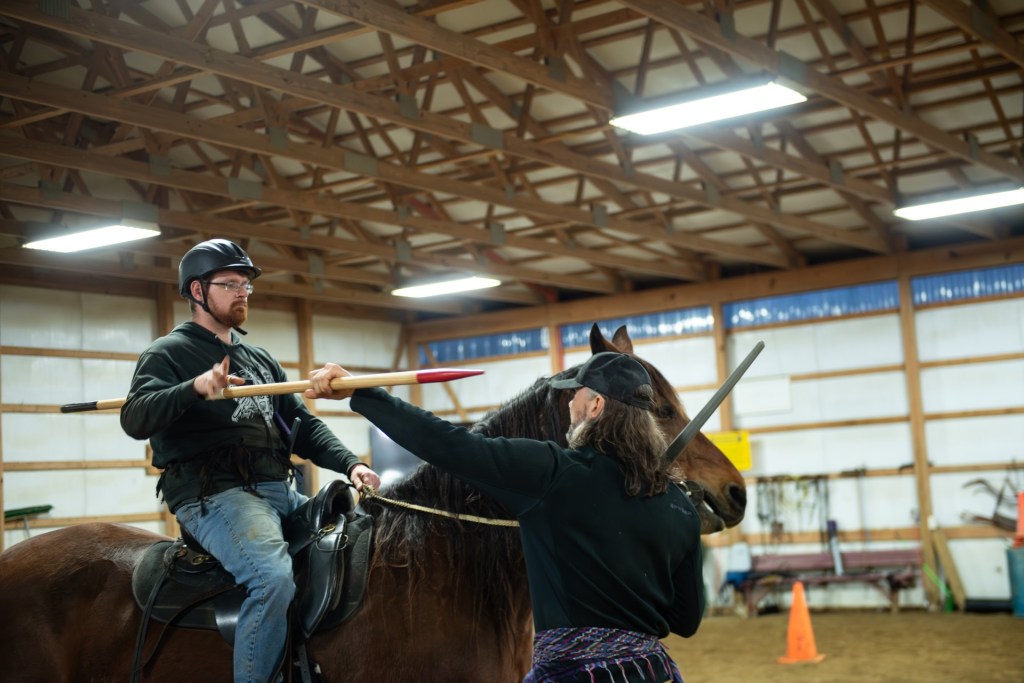
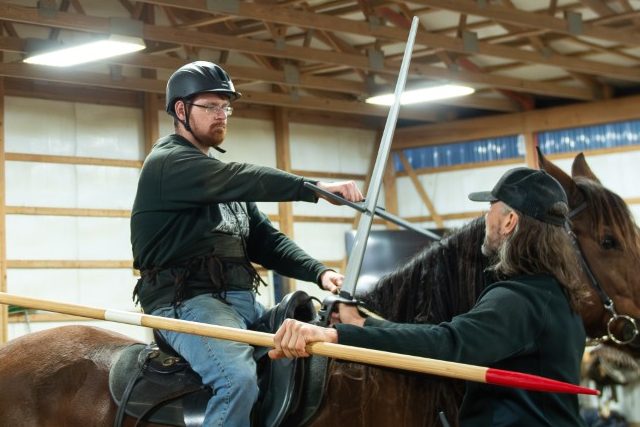
A clever and attentive infantryman who “sees you coming,” so to speak, may set aside and may seize the lancer’s lance. Typically, the lancer massively has the advantage on judging the moment of impact, being the one in motion, but if the infantryman’s spacing and timing is skillful enough, he can set aside to his left the tip of the lance with his left hand, then swing his sword (in this example, though any swung weapon may substitute) at the now open cavalryman.
Normally, our cavalry would mitigate this sort of move by “shrouding” the lance, keeping the adversary on the outside of the lance until the moment before impact. This play assumes that has failed, whether by the cavalryman’s neglect to shroud the lance, or by clever handiwork of the infantryman.
We counter this with the katar (push dagger).
from the collection of Sir Christopher Ondaatje
The katar has langets on either side to allow some manipulation of the adversary’s blade; but more importantly, it typically has a quillon that curves upward (towards the tip of the katar’s blade), which we will use to trap the adversary’s blade.
from the collection of Sir Christopher Ondaatje
The Play
Once the tip of the lance is past its target, it can do no damage. As soon as you detect that the infantryman has taken the lance and is getting inside, let go of the lance and prepare to transition:
Immediately draw the katar. Carried in the waistband, point down to the left, the katar will be online with the target with the same motion as the draw, and is very efficient and fast—as well it must be, as the horse is presumed to still be moving forward, conducting you into the infantryman’s next attack.
The infantryman cuts a descending cut with his sword—top-down or top right to bottom left. Catch the edge of the sword in the quillon of the katar.
Continue forward to crowd the sword against the infantryman and drive the katar into him.
Carry on with the mission.
Some Considerations
The time between disarm and what happens next is short. The infantryman must be very fast to get between you and your lance; you must be even faster to react by transitioning mid-attack while at a canter. Katar placement and carriage matters. Your chances of pulling it off in a fight are greater than zero, but success is not assured. Nevertheless, the play has value as a Martial exercise in optionality, as a practical application of lance-to-katar transition and katar-on-sword play, and, practiced at full speed, a test of speed and fitness in manual of arms.
Rider fitness is an integral part of the program here, and should be taken for granted in any riding program; but most of my students who have ridden before had little or no physical education for their own bodies from their prior equestrian training.
What follows are a few categories of exercise to consider: rider skill-improving exercise (to directly improve your riding ability), corrective exercise (to balance out your body from riding), and antagonistic exercises (which should be avoided or done in moderation).
Skill-Improving Exercises
General Fitness
Doing anything that works your body dynamically will improve your fitness for riding. Much of what we call “fitness,” especially for equestrians, is actually coordination and the body’s predictive ability. Your brain is able to prepare your body for what is about to happen by adjusting your body in time. That has nothing to do with how much load your muscles can resist, how hard your bones are, or how efficiently your heart and lungs work.
The physically active student is more able to execute the “what” without needing the exposition of “how.”
Yoga
Some will consider it sacrilege to call yoga a “workout,” but you should be realistic about what you are signing up for at the yoga studio on your block: it’s a workout. That serves our purpose, so don’t feel guilty about that.
Yoga practices supporting and balancing your own weight with active range of motion. Flexibility, or passive range of motion, is generally a bad thing—except, in our case, for ankle flexion, and yoga really shines here in its emphasis on the position known as “downward facing dog,” which is the most heel depth-compelling stretch you will find in a system outside the barn—or even including in the barn. Downward facing dog is very good for your stirrups. Concurrently, strengthen your legs and learn to be balanced and responsible for your own weight.
Unusual movements and the calling of attention to parts or areas of the body serve to improve your body awareness and body autonomy, which are extremely important to the rider’s often counterintuitive movements while astride.
The culture of being intensely physical while being calm also translates well to riding. Excitability never improves your riding, and yoga trains you to manage that.
Train in earnest—don’t just be there for the shavasana.
Partnered Dancing
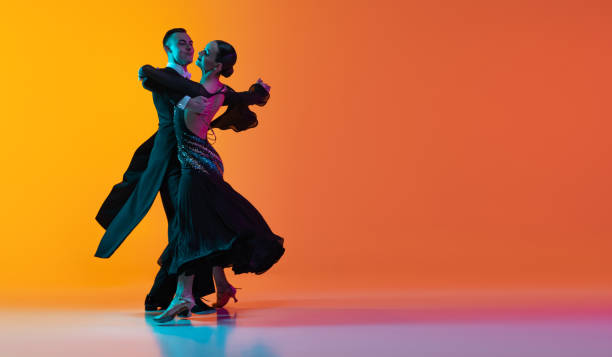
By far the most relevant cross-training on this list, (some) partnered dance is almost exactly what you do with a horse, but with a person. “Social” dancing, or dancing extemporaneously, and especially with different partners, is imminently more useful than competitive dancing, which requires more sequence memorization than lead and follow. Dancers, like horses, know how to do some things and not others, and respond differently when following, or lead differently, for the same moves.
Should you take rhythm or smooth dances? They both have something to offer.
In the smooth dances, the lead and follow while dancing “in contact” (pelvis to pelvis), is more relevant to tracking the saddle or back of the horse while riding. The waltz, in particular, has a circular motion and three-count timing very similar to the canter. Like riding, it involves two skeletons, controlled by two brains (one of them yours), moving together. Not all skeletons match well, human/human and human/horse alike—smooth dancing will sensitize you to this without you having to fall and hit the ground if you reach the failure point.
In the rhythm and club dances, the lead and follow at the hand will help your sensitivity and application at the reins, but you are really here for the Cuban motion, which will teach you to apply pelvic articulation moving with your partner. The more Cuban motion, the better—do cha cha, rumba, mambo, or whatever dance you please, but there should be Cuban motion, and especially lead and follow with Cuban motion.
Although the ankles extend (the feet point) a lot but flex only a little, suggesting antagonism to your heel depth, the emphasis on footwork and foot and ankle awareness will be good for controlling your heel depth, which is almost always a matter of the heels creeping up unconsciously, not a matter of flexibility.
Any partnered dance is good for developing the appropriate coordination, but the abovementioned dances are particularly close to the experience of riding. You will start to think of your horse as your dance partner, and your horse will thank you for it. A human dance partner will not put up with abuse or let you put words in his or her mouth.
Learn both roles, lead and follow—you do both while astride. Disregard the flashy stuff, stick with what can be led and followed—a simple left and right box done well, vigorously, with no music, will do you wonders for your rider fitness.
You’re learning for different reasons than most people, so ask your instructor specifically to develop your lead and follow and Cuban motion.
Honorable Mention: Grappling/Wrestling
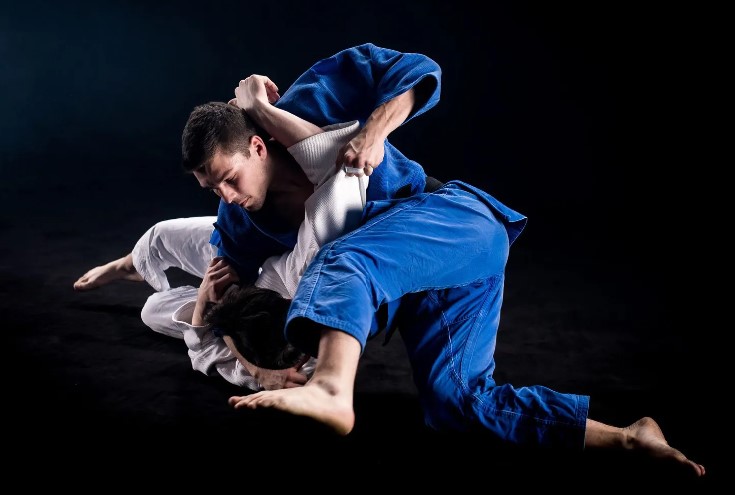
Like ballroom dance, grappling is the interaction of two skeletons together, albeit in competition with each other. Where this excels over dancing is that the horse will sometimes do things unexpected and undesired, and the aim of grappling is to prevail in just such situations.
When I was a ballroom dance instructor, I had a very young couple come in for their wedding dance. Usually the woman is a much better dancer in these cases, but the young man was extremely good and grasped how to lead very easily. Upon probing, I discovered him to have been a competitive collegiate wrestler. The skills were transferable. Two skeletons moving together, one brain in control of each.
A certain discipline of grappling is extremely popular right now and easy to access, while also having a huge corpus of conditioning exercises to produce competent grapplers. You may be as serious or as casual as you like with your training, as the culture of the school permits.
Corrective Exercise
A riding partner of mine has put in many, many hours of riding over her whole life, and has done almost nothing else for physical fitness training. She sees an expensive physical therapist every week and needs pain management every day in between. Her kid has been riding since before she could speak, also does not have other physical pursuits, is still only a child, and also sees the physical therapist. Riding hard and without complementary exercises will throw your body out of balance and hurt you.
These are exercises that, although not specifically good for your riding, are good to treat your body to if you ride hard and frequently (or need a break!).
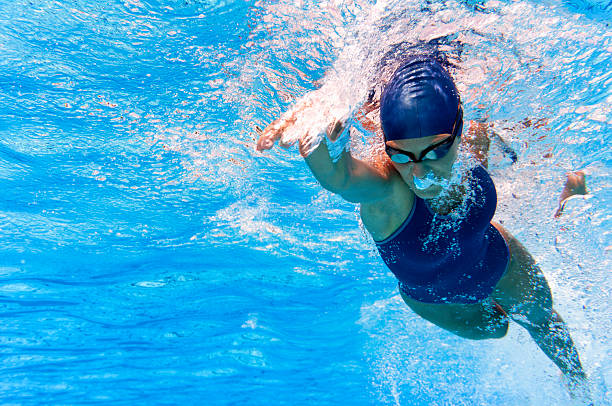
Swimming
A no-impact, full-body exercise that you can control the intensity of, swimming is also a massive departure from the barn environment. Swimming is a good way to rebalance your body, and a good way to schedule in some exercise if you are seriously burned out from riding, without deprecating your riding ability.
Swimming in wild water (an ocean or a lake) is better for the soul, but your body will still benefit from a swimming pool.
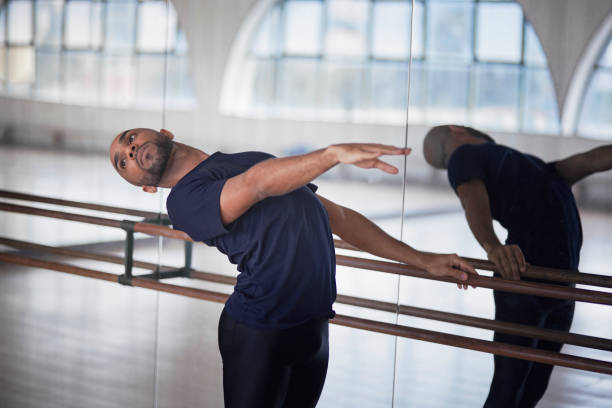
Barre
The warmup exercise for ballet strengthens muscles around the pelvis and realigns the lower back in places that can start to fall apart for some high-frequency riders. If you are a good rider and know it, but wake up with back pain, give this a try. Tendus, done well, have sorted out a few advanced riders. Working the legs with turnout will help rebalance the muscles that are often turning the legs inward, sometimes strenuously, when you ride.
Many studios offer barre exercise to non-dancers as a standalone exercise; some are dedicated to barre exclusively.
Exercise to Avoid: Antagonistic Fitness
Refer back to my first suggestion: it is better that you be fit in any way, than not fit, for the sake for your riding. If the only thing you can possibly do for fitness is what follows, or if you love doing it more than you love riding, then continue. Just know that will hold you back from your optimal riding condition.
Running
The worst culprit goes first. Running is easy, cheap, and requires no imagination, so it is ubiquitous. Being a good runner necessitates that you have passive tone in your ankles and calves, which is bad for your heel depth. You can run and ride horses, but you cannot do both well, as they necessitate opposite functions of the lower legs (if you use stirrups).
A lot of endurance riders wind up legging it on their own two feet for parts of their races, but unless you are preparing for one of these—or unless you don’t ride in stirrups—riding is not a good cross-training option.
Weight Lifting
Lifting comes in different flavors, but all require your body’s stability, not mobility. The higher the weight the more this is true. You need mobility to ride well. The act of riding is a sort of active floppiness, a yielding of the body, the likes of which is incapable of distancing iron (or stone, or tires, what have you) from the ground.
Anything “Explosive”
There is a trend of training “explosive” movement in team sports. The prescribed exercises for it, like squatting glutes-to-heels, are damaging multitudes of teenager’s bodies, probably permanently, and no one is being held accountable. But even if there are safe ways to train to accelerate the body suddenly, it is a movement quality irrelevant to sitting a horse, requiring a type of tension that is incompatible with the flowing movement you need on a horse—even, or especially, when the horse moves explosively.
In my past life as a kickboxer, I was what they called a “hitter,” meaning that my hits landed with a lot of power. Professional kickboxers had to wear mouthguards while holding the strike shield for me. A lot of coaches teach “explosive” power to try to achieve those results, but I assure you—and know wherefrom I speak—that the transmission of scary hard punches and kicks are from flowing like a whip, not from exploding like a bomb. Play the videos of any famous hitters in slow motion and you will see that flow generates their power. Economy of motion gives the illusion of explosion.
Ditch the “explosive” exercises. If you like team sports, most of whom espouse this obsession with explosiveness, take up polo.
Final Thoughts
B.S. Check Yourself
A riding instructor I know contradicted a popularly-held mistruth about riding and was, predictably, pilloried. One of her hecklers writes, “Physics works differently on horses.” I cannot believe, and do not believe, that she was stupid enough to think that physics works differently on a horse. Claiming belief in that issue was a tribal signifier, and that gave her (and many like her) leave to say, in her echo chamber of corroborators, something completely wrong. That’s called a “dogma,” by the way.
In Martial arts circles, falsehoods and charlatanism are moderated, and collectively labeled “Bullshido.” There needs to be this kind of policing in equestrian sport.
When I was doing parkour once, the club leader did a thing with a certain movement quality that no one else emulated. I asked him about it, and he said, “Ah, well in breakdancing, they would say…but in gymnastics, they would say…” He didn’t even say, “in parkour, they would say…” You want to be able to have this kind of global perspective of your riding, or any movement practice.
Cross-training helps you cross-verify. Get outside of your closed environment, with its tribal signifiers and re-regurgitated maxims. Train in multiple things that explain and apply the same phenomena in different ways, until you can triangulate the truth, then explain and apply them in your own way. Physics is always physics, gravity is always gravity, inertia is always inertia, the human (and equine) skeleton only moves in so many ways.
Do Something You Enjoy
Odds are that you ride because you love it. For a lot of people, that is destroyed by an abusive instructor (particularly for children). But if you are sticking with it long enough and seriously enough to ask the question of cross-training, you must love being on a horse. Don’t ruin that by cross-training in something you hate. Do something you like—or love—and let it improve your relationship with riding, with no strings attached.
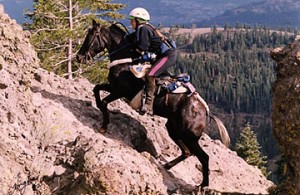
The Tevis Cup—a 100-mile, 1-day race in the mountains of California—is on today, and a lot of riders are dreaming about being one of the GPS dots on the map. But how do you get ready? We’ve put a few derby riders through our program and seen what works, what doesn’t work, and have some perspective about a realistic timeline for training that has good results. If you want to compete in the Tevis next year—or any other endurance race—here’s your one-year timeline to get prepared.
12 Months Until the Race: Learn Relevant Technique
One year out is about the time to start getting serious about your training, and most people start by trying to build up their physical fitness—but hold off on that. Step one is learning riding technique—relevant technique. There’s a misconception that dressage is just generally good for technique, but as I explain in this post, dressage technique is good for dressage, and bad for endurance races. You need riding technique that is sustainable and defensive over a long time and sometimes at high speeds, and keep your horse happy the while.
Martial Equestrian and Stable Riding cover those techniques in 2- and 3-day rider intensives—a small time commitment that will pay off for the rest of your lead up to the race, and for the rest of your life as a rider. Almost everyone who has gone through this intensive has said something like, “I learned more in the last 3 days than I have in the last 20 years.” A race finisher—and all of our graduates have finished—said, “This literally saved my life in the Mongol Derby.” Those who took our intensive for the first time closer to the time of the race agreed that this should have been the first step—so do this first! It will also arm you with a more educated opinion about what gear to ride in and what horses you should be practicing on.
Learn the relevant technique first so you can practice it for the rest of your training without trashing your or your horse’s bodies. Your knees don’t have to hurt, and you don’t have to tough it out.
12 – 8 or 6 Months: High Volume Riding
Now that you know what to do, it’s time to do it a lot. How you get your volume in depends on your situation. Join a trail riding club that puts in some miles; go to some fox hunts; ride several horses a day, several days a week at your barn. Get in “bounce time” where you can (only, after the abovementioned intensive, you won’t be bouncing anymore, to you and your horses’ relief), and try to stay close to conditions like the race (not dressage!) as much as you can.
That toughness you thought you needed with your body, now you’ll need it to stick to your training. You have time still, so don’t burn out, but—
Ride, ride, ride!
8 – 6 Months: Mock Derby
Now that you have some time in saddle with appropriate technique, let’s get you into a real long-distance ride emulating the conditions of a derby. Stevie and Dylan at Intergalactic Equine are the place for this. They are veterans of multiple endurance races and their training covers the gear you’ll be using, how to use the GPS, race-specific considerations (like how to pass your vet checks), and they will put you on an actual long-distance course to put everything you know so far to the test. You will also get a healthy dose of fitness training on the ground to make sure you’re up for the rigors of the race—some of which you may run on your own two feet.
You’re at the halfway point here, and your experience at Intergalactic Equine should be a reality check. Don’t expect it to be easy, but use it as feedback for what you’re missing.
6 – 3 Months: Remediate Your Weakest Points
You have been tested in realistic conditions. How did you fare? Does your technique work on the ride? Is your equipment right? Does everything make sense? Are you in good physical condition? Get back to your high volume riding, but focus on ironing out your weaknesses.
3 Months: Technique Class pt. 2
It’s been a while since you drank all that information from the firehose at the beginning of your 12-month countdown. Some things you might have forgotten, some things will have more context, and some things you will have mastered. Now it’s time to review, train with perspective, and upskill.
Now is time for the second intensive, where you’ve had time to practice for endurance riding seriously, and where technique training will be fresh when you go ride. Let’s do another 2- or 3-day intensive at Martial Equestrian x Stable Riding.
3 Months – 6 Weeks: Practice What You Know
There is still so much more to learn about the art of riding, no matter where you are on your journey, but now is not the time to learn it. Cut off new things and be sure you have mastered what you know so far. Eliminate distractions. Ride hard when you want to ride hard; ride easy when you need a down day—but ride, ride, ride, and without shiny distractions. La garrocha can wait until you come back from Patagonia.
6 Weeks and Beyond: Taper Your Training
You’ve given yourself time to train and trained appropriately; you’re in the best shape you can be. Time to dial back on your training and give your body and mind a chance to recover completely so that you are 100% on race day.
Keep exercising but exercise light and do what your body needs most—think of this stage of your workouts more like physical therapy. Keep a good diet and sleep schedule. Take walks in the woods. Meditate. Top off your tank.
One more word of advice: If you’re not ready, don’t go. There will be another race. Don’t throw away your efforts so far just to be miserable and possibly drop out.
If you’ve done all these things and treated your training seriously, realistically, and intelligently, the race will be not only a memorable experience, but an enjoyable one. Be a rider who’s smiling in every picture and means it. You’ve got this!
We train a lot of endurance riders preparing for the Mongol Derby, the Gaucho Derby, and the Tevis. All of our riders have finished. All of them have expressed some comment like, “I’ve learned more in the past 3 days than the last 20 years.” None have come with a seat and riding technique conducive to long riding, while tired, on semi-feral horses. And peculiarly, almost all of them take regular lessons in, of all things, dressage.
There seems to be some vague and sweeping notion that dressage is “the best” form of riding, the crème of technique—without qualifiers. Certainly, when one looks at what is possible with a horse beyond walking, trotting, and cantering, dressage offers a host of new maneuvres. However, there is precious little correlation between dressage training and endurance riding, and however much one might think s/he is learning more about riding in general, the lessons from dressage mostly do not transfer. Here are some ways dressage diverges from endurance riding:
1) Dressage is for dressage-trained horses.
A horse needs special training to do dressage. Some dressage apologists will disagree with this, but only with some mental gymnastics, as the case is weak. Try to ask your Mongol pony to do one tempis and it will tell you to take a hike.
2) Dressage utilizes a different breed/type of horse than the derbies.
The fitness and morphotype of the horse able to perform the extremes of dressage or the extremes of an endurance race are necessarily different. Their center of balance is different and their movement quality is different. Their head carriage is almost 90 degrees different. Mongol ponies don’t get chiropractic and PEMF, and dressage horses don’t go extremely long distances. The company ballerina’s body is not the marathon runner’s body. It can’t be.
3) Dressage uses different rider muscles than endurance riding.
Like the horse, the rider also requires specialized fitness. There is little overlap, and in fact the fitness for one is often antagonistic to the other. Getting very fit for one discipline can actually make you weaker in the other. At a casual level, you wouldn’t notice, but when it’s derby time and you’re training hard, you can’t be good at both.
4) Dressage horses travel slowly.
Your Mongol pony will not canter in place. This massively changes your situation because of inertia. Your ear-hip-heel alignment that is mistakenly taught in so many dressage circles will flip you right off the horse if it—and therefore you—is moving fast and suddenly trips. The threat of moving fast necessitates positions that accommodate forward inertia.
5) Dressage is performed in a small space.
The endurance rides—derbies in particular—cover huge distances. On any of the derbies, there are no walls to contain you, no letters to aim for, no return to the same place you were a few seconds ago, nothing to stop your horse from going full speed—with or without you, whether you’re on it or being dragged or left behind.
6) Dressage is conducted for a short time.
Your dressage training is usually 30 – 60 minutes. The tests are 9 minutes or less. The Mongol derby lasts for 10 days. Because of the brevity of dressage events, there is a certain level of intensity and focus that’s completely impractical in a derby. Sustainable riding is needed to get you through without suffering, as well as tactics to stay alert and safe over a long time, and that’s not what dressage does.
7) Dressage is for fair weather.
Have you ever ridden dressage in the rain and mud? If so, you didn’t have to. What you wear and how you sit when you ride is affected by the reality of the elements you aren’t exposed to in dressage.
8) Dressage uses completely different tack.
Because of the abovementioned factors, endurance riding uses different gear. This affects your riding. Try your dressage training in endurance tack and see for yourself. You’re not getting better at riding with endurance gear when you’re riding with dressage gear.
9) Dressage is Solo
If you’ve never had to ride in a group of horses, with horses acting out their social dynamics (like whom they disapprove of) and anxieties (like getting left behind), and if you’ve never had to ride your horse around other horses (so that you don’t collide and nobody gets kicked), then no amount of dressage experience will prepare you for it. Endurance rides are in groups, and group rides play out differently and require a different type of awareness and intellect to safely enjoy.
While many people treat endurance riding like it’s just riding, but longer, we’ve seen and demonstrated that riders get the best results riding as if they are riding for a long distance and time, with technique tailored to long rides on sometimes unpredictable horses. If you are one of the many endurance riders who studies dressage for your technique, stop treating the endurance part of your training as just needing more toughness and stamina, and start treating endurance riding as a discipline, with its own necessary technique. Toughness and stamina are consumable—you will eventually run out—but technique is not. All of our graduates, who all had extensive riding backgrounds, reported their riding being so much easier and less scary and having less pain after our technique clinics.
How do you get into a clinic? Drop us a line from the contact page or email directly at contact@martialequestrian if you want to schedule a 2- or 3-day clinic here in Ohio, or if you want to arrange for us to come to your barn.
I recently had a fall that resulted in a serious injury—a century ago, they might have cut my arm off, or left me with one that doesn’t work. Somewhat ironically (at least on the surface) I came off a short, out of shape pony and landed in wet grass. A few people said to me, after the fact, that “it happens to the best of them,” and I’m sure they meant to be consoling, but I challenge that.
I’m very hard to unhorse, and every time I’ve come off—which is rare—there have been at least three red flags. Not two, not one—three.
If you know what you’re doing you know these flags are apparent. The accident didn’t happen to me any more than drowning happens to cave divers. It was a consequence of informed and bad decisions enabled by overconfidence.
This is what happened:
I:
rode a horse who hadn’t been worked all year
who didn’t know me
whom I didn’t know
who was suddenly asked to work a tedious,
spooky,
and long training iteration
which I found boringly easy so I was feeling cocky and/or complacent
which was now over and she knew it but was being asked to work again
who was herd sour (from me knowingly riding an impatient, anxious horse away from the others)
who was a bad anthrohipponometry for me (she was too small for me and therefore slippery—a taller horse wouldn’t have pulled off her little coup on me)
had only a loose ring snaffle so basically no brakes
in an open area with no environmental obstacles to slow her down
and I was under social and professional pressure to follow through with the dangerous thing I was about to do, being among my cohort from the recent training we just graduated, and in front of one of my students—I didn’t back down when my better judgment warned me to.
What followed was incredibly predictable. She bolted, full gallop. I could either have stood the gallop and ride it out, or lean back and try to bring her back under control. I feared the former, with her being unused to regular riding and being on soft footing, was a huge wipeout risk for her, so I leaned back. With a small horse at a panic gallop, it’s nearly impossible to sit without catching some air, so my seat wasn’t stable. When I asked her to slow down once, twice, thrice, she ducked her head down and shot out to the side—she slipped out from under me. The last card I could have played would have been saving the fall, which would only have taken me raising my elbow up to my ear. Seriously, that would have made the fall a non-issue. But the time to impact from when I knew I was coming off, from a small horse at her fastest gallop, was too short for my reaction time. It could have been done, but, at that speed, only with recent rigorous training rehearsing that specific scenario, which I admit I had not done. (Ironically, I was going to start filming me falling off many cantering horses the very next week to advertise my fall school. Wrong order of operation.)
But whether or not it could have been saved after the fact of her bolting is neither here nor there: I was in that dangerous situation because of all the other conditions and decisions I made the moment before. The question is not how to save such a dangerous situation, but how to avoid it.
Every fall of mine has had at least three red flags; I just counted 13. And I knew all those things before I threw a leg over.
I got cocky and greedy and paid for it.
Don’t think it’s only a matter of time before a horse injures you. If you do fall, replay what happened—identify the red flags. Learn. Ride wisely, with jurisprudence and respect for a heavy, strong, fast animal, keep your red flags under three, and you’ll be fine.
Are you interested in mounted archery and considering thumb rings, but don’t know what you need, what design to use, how to start? Practical information follows.
Do I need an instructor?
No, you don’t need an instructor, and certainly not one who says you do. “You need an instructor” is toxic, gatekeeping rhetoric. Don’t get stuck in that mental hamster wheel. Remember that at some point, someone had to figure it out. You don’t need an instructor—you need to learn. That said, you might find someone who knows some things he or she can show you. There are, however, some weird dogmas out there about how to do things “the right way” that have nothing to do with actually using thumb rings effectively, so keep your critical thinking filter on, and be willing to pass on advice.
What’s the difference between thumb ring types?
We’ll look at four designs here and briefly go over what they do and how they work. They include: a shallow hook thumb ring, a deep hook thumb ring, the Manchu ring, and the Sugakji (Korean “male” ring). If you know a little about thumb rings, you might think that list has an odd taxonomy—a shallow hook thumb ring is not a specific type, yet a Manchu ring is. This list is, after all, for people looking to get started with thumb rings, and so is categorized by design.
1. The Deep Hook Thumb Ring
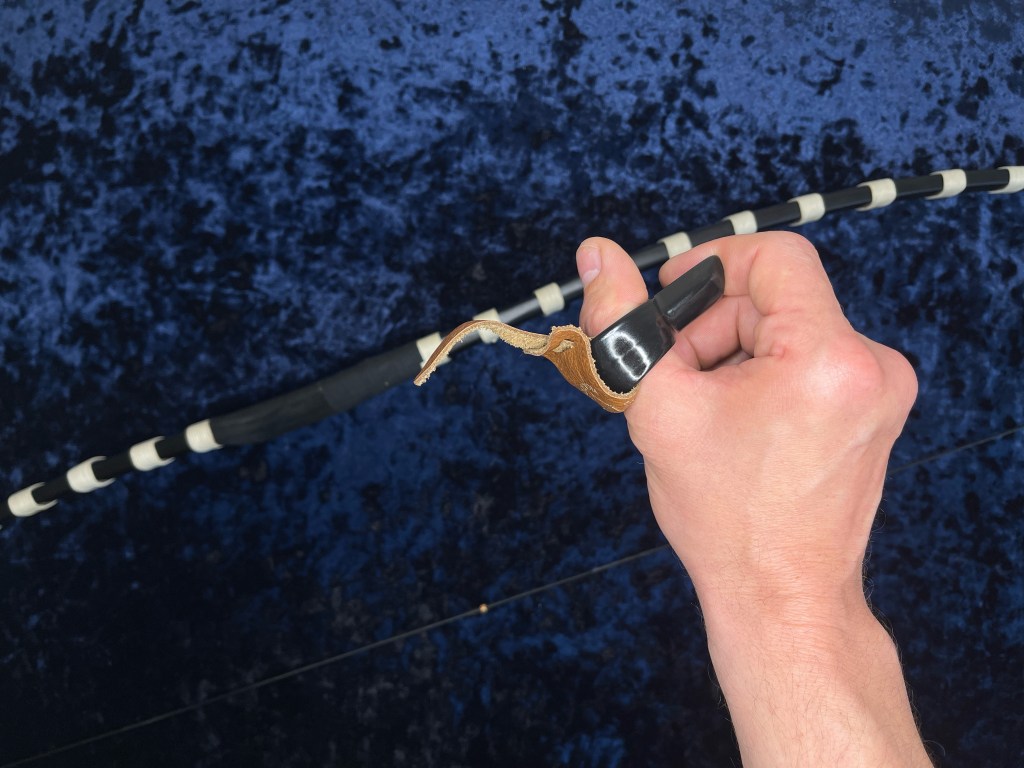
A deep hook thumb ring, as opposed to a shallow hook thumb ring, is used by curling the middle joint of the thumb all the way over the working side of the bowstring. The technique is the same as shooting with a bare thumb or shooting with a leather tab. You grab the string with your thumb, and the deep hook thumb ring is between your thumb and the string. A deep hook thumb ring is basically a hard thumb guard.
PROS: Because you use this ring the same way you use a bare thumb, most people find this type of thumb ring to be more intuitive or easier to learn.
CONS: They cover a lot of the surface of the thumb and can interfere with arrow handling and manual of arms, and reduce sensitivity.
The typically long ramp on the front can accidentally hook on the string while trying to nock.
Because no fleshy part of the thumb is touching the arrow or string, it is also very slippery.
These reasons all make the deep hook thumb ring a little slower to use. A leather thumb tab works exactly the same way and has none of these problems.
2. The Shallow Hook Thumb Ring
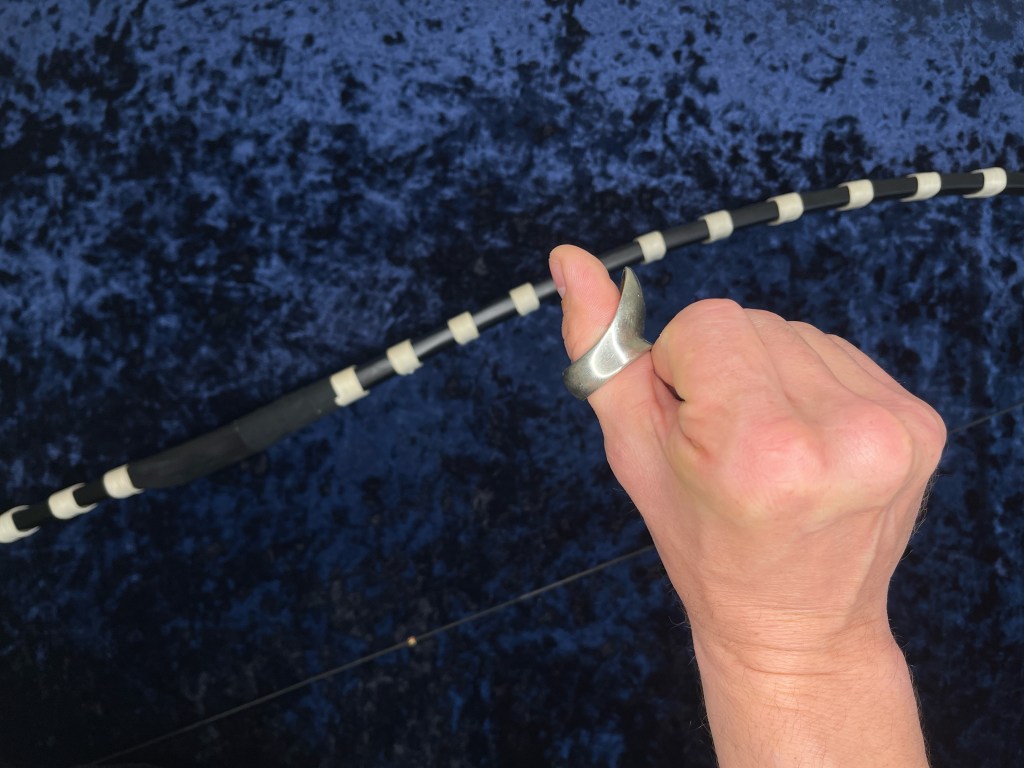
A shallow hook thumb ring, as opposed to the deep hook thumb ring, hooks under the front of the ring, and acts as a trigger, not unlike a guitar pick on a guitar string. If you trap the thumb with the index finger (making a sort of knot with the finger, thumb, arrow, and string called the “lock”), the distal phalanx (the end part) of the thumb does cross the string, but the thumb is not holding onto the string—the underside of the thumb ring is.
PROS: The operation of this type of ring is small and efficient. Shallow hook thumb rings tend to have a short ramp on the face and can “clear” the string when nocking while keeping things close. If you’re shooting for speed, this really can’t be beat.
CONS: The string, when trapped, is held under pressure at a corner between the underside of the ring and the flesh of your thumb. Depending on the toughness of your thumb, how thin the string is, and the poundage of your bow, this can chafe.
Because shallow hook thumb rings tend to be small, they can fall down the thumb sometimes, especially if you have a knuckly thumb.
Both of the above problems are remedied by a leather tongue called a “kulak,” or by wrapping a piece of tape around the thumb under the thumb ring.
3. The Manchu Thumb Ring
Effectively a shallow hook thumb ring, the Manchu ring is easily identified by its large, cylindrical shape. It “traps” the working side of the string and works as a trigger.
PROS: Because of its height, it doesn’t fall down the thumb—in fact, you’ll be hooking the string back near the base of your thumb.
Also because of its height, there is more surface to distribute the weight of the string across the thumb—with proper fit, this can be a very comfortable ring.
CONS: The Manchu ring takes up a lot of real estate on your thumb. You lose even more access to the use of your thumb and sensitivity than with the above-mentioned rings. Even pulling arrows out of the quiver is more difficult than with rings that expose the bottom of the thumb.
Many modern Manchu rings are made with 3D printing and have a rough, woven pattern going across the direction the string needs to pass, which creates unnecessary drag.
4. The Sugakji
The Sugakji, or “male” ring, is particular to a traditional Korean style of archery. It has a phalange-like projection out the front (hence the “male” designation) that bars the working side of the string and is held down with the index finger. It also works as a trigger, but the trigger is the bar against the finger, not the ring against the string. A tapered strip of leather can be passed through the back to tighten the fit.
PROS: Like the deep hook thumb ring, the Sugakji takes the entire weight of the string, without any of it touching your thumb.
Holding down the bar with the index finger is strong and feels intuitive.
CONS: The projection gets in the way of manual of arms and is easy to hit and turn the ring sideways. Unlike with the other rings, however, it is easy to turn the ring back into place with the fingers of the same hand.
Fitment is tricky since the directional tension of the string tries to push the ring off.
Conclusion:
It’s perfectly fine to have one of each of these and shoot each one until you have a favorite, or just shoot whichever you’re in the mood for. Keep in mind that people usually have to try out several rings to find one that fits, and even if it seems to fit, some heavy shooting might reveal that it does not. (Typically, you will be best served with the tightest ring you can fit onto your thumb.) Be willing to go down in weight—all the way down—to test or troubleshoot thumb ring issues, especially if you are hurting your thumb.
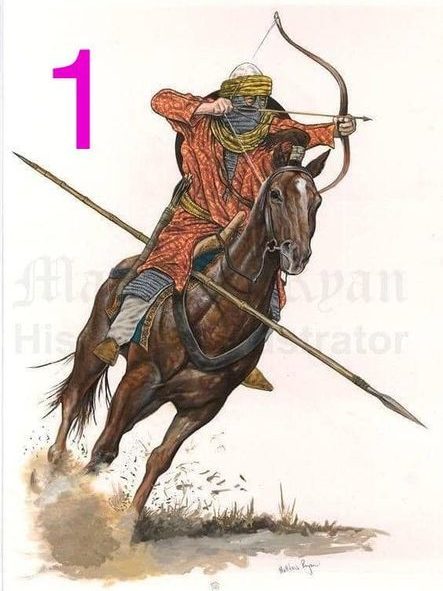
We saw this depiction circulating of a Mamluk performing a lance—>bow transition. It happens that weapon transitions are a favorite topic of ours, so we had a go.
To clear the air, before we dig in, I do NOT take for granted that “historical” implies “effective” or even “true.” I’m NOT disputing whether or not this is historical, or trying to determine its historicity, or agreeing or disagreeing with the illustrator (Matthew Ryan) or the commissioner for the illustration (David Nicolle). I saw a technique and wanted to attempt it. It might as well have been in a comic book, for our intents and purposes. We are Martial technicians and interested in Martial technique in practice. For what it’s worth, people more interested in the historicity have pointed out that the text this supposedly derives from does not advise this technique at a canter, but while standing–in other words, that this is a mistranslation.
As pictured (picture 1):
First of all, the illustrator (Matthew Ryan) is incredibly skilled and has done a great service for the subject of military history, and I’m sure is informed by whatever limited data are provided. The picture shows the lance tucked under the knee, lance head down to the front, shoe up to the rear, apparently without stirrups. If you ride and handle weapons, it shouldn’t take a lot of imagination to figure out how to get here: swing the right leg over the lance and trap it.
So we tried this orientation first: lance head down to the front, lance shoe up to the rear, no stirrups (picture 2).
Problems:
Despite no stirrups, allowing the knees to drop down, the knees still have higher relief from the saddle than the thigh or calf—there’s a hollow spot under there. You really have to squeeze the knee pretty aggressively to hang on. The inside of the knee really doesn’t like that—and this is just practice, not battle, don’t forget. Now the horse is compliantly steering left, which I don’t particularly want to train her not to do just for the sake of this trick—not for a horse I need to be able to steer while my hands are busy spilling blood.
What’s worse, the lance in front of and behind the knee is hitting high spots on the horse (the shoulder and the hip or stifle), spots that move. With just the right anthropometry/hipponometry, it might all fit together nicely, but that’s a really big “if.” Not useful or realistic for an entire army. This way is out.
Also, given the choice, I’ll take stirrups to battle—and I don’t suck without stirrups, and neither do any of these riders who tested this.
So again, with all due respect to the illustrator—and I do have respect for this illustrator—this configuration (if this method was actually used) seems improbable.
Next orientation: with stirrups, lance head down to the front, tucked between the leg and saddle/stirrup leather.
This requires tucking the lance in from the front, shoe first, which is a bit awkward. All the above problems were amplified, in addition to the threat of the lance getting tangled up when you drop it, between the foot and the stirrup leather (which puts the lance head pointed at the horse’s body on its way out).
Next: no stirrups, lance head up to the front, shoe down to the rear, between thigh and saddle (picture 3):
This put the lance perpendicular to the thigh and under the meat of the thigh, and immediately works better—if only for this stage of the transition (stowing the lance before readying the bow), but it came at the cost of having the front of the lance all up in the rider’s workspace. Reins were hard to manage, and managing a bow and arrows was untenably awkward.
The pommel on the Abetta helped to keep the lance out of the way, but then the lance head was perilously close to the horse’s head.
Next: stirrups, lance head up to the front, between thigh and saddle (pictures 4, 5):
This was very tight when standing up in the stirrups, only, and only with the pommel on the Abetta. It only sort of got in the way with the archery. The problem here is that you’re stuck standing in your stirrups throughout the whole maneuver, and if you ride horses that bolt, spook, or do any of the things that horses do when menaced (such as in combat), you’ll know that sometimes you need to sit down. It’s tight, it works when it works, it’s unreasonably conditional.
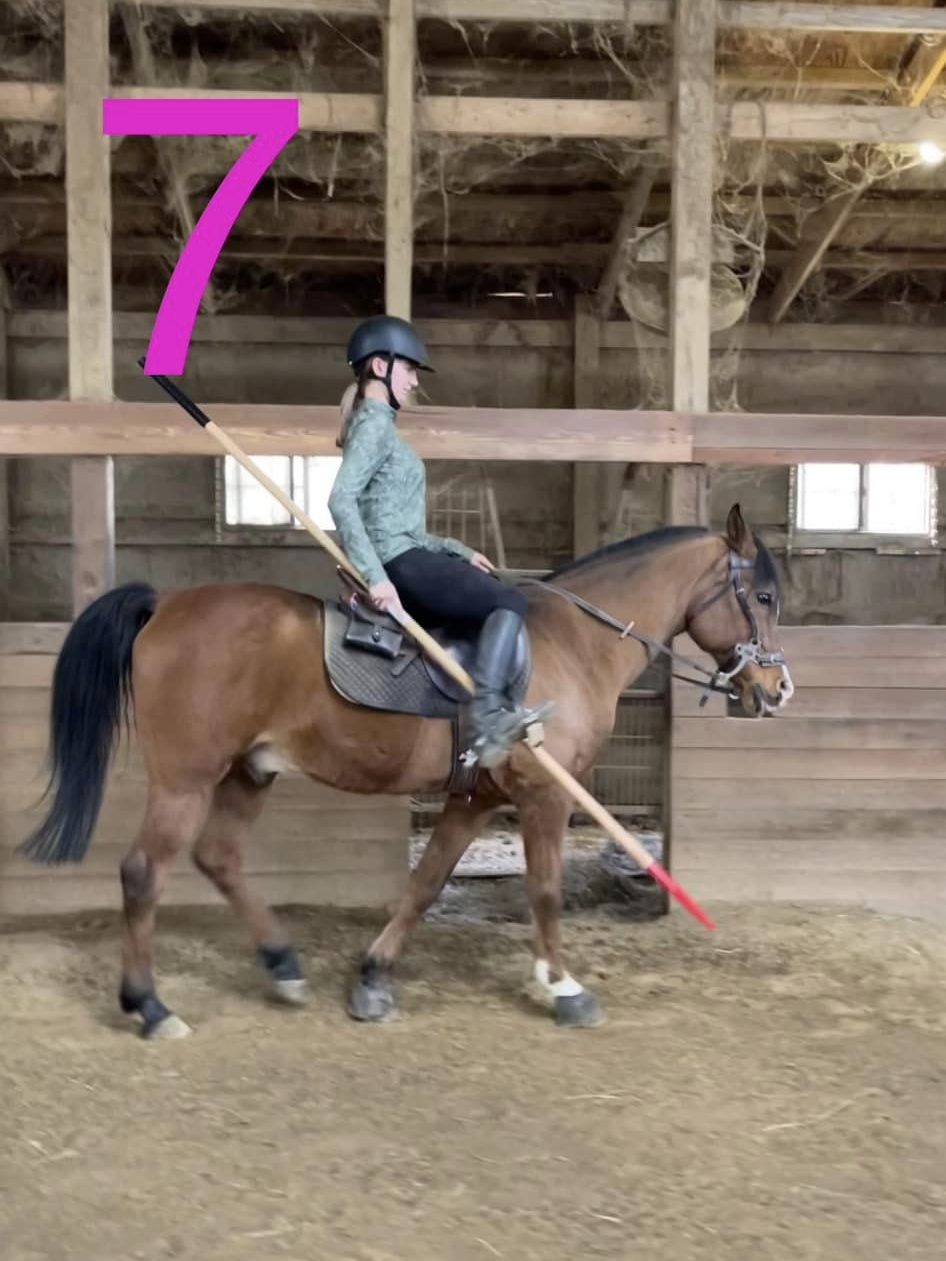
Next: stirrups, lance head down, under the stirrup leather (pictures 6, 7):
Our most success came from tucking it under the stirrup leather. I felt a little better about this in terms of safety because the lance is less likely to get tangled with the rider than it is when between the leg and the stirrup leather. Here you see it on two saddle types: one English, and one Abetta (hornless Western synthetic). Granted, neither of these are museum replicas of Mamluk saddles, but the ones I have seen don’t look particularly better suited to the task. If you disagree, prove it.
Our English rider fared better than the Abetta rider, for two reasons:
1) The English leather was stickier and gripped the lance better
2) The back end of the lance was caught by the sandwich case
That latter point bears repeating. Hardware on the saddle held it up. Everyone involved in the exercise felt like there should be something on the saddle to hang the lance from. And if this was done, I think they would have thought the same thing.
We found no orientation that facilitated both light and deep seat.
We’re not Mamluks, or professional military lancers, admittedly; but even if we were, would we train our asses off to get reasonably good at this technique, when there are arguably simpler and more reliable options?
It’s not robust. That is, it’s a bit tricky, the conditions have to be right, and the likelihood of failure is unreasonably high. Sure, you can train to get good at it, but why waste time on such a finicky technique? That’s like doing a spinning jump kick in a street fight—you might even pull it off, but it’s so risky that you’d have to be pretty crazy to try it. I’ll concede that stupider ideas have crept into military doctrine—just look at the Tae Kwon Do manual that was in US Army circulation for a while. (And what will the history books say about that in a few centuries? “Historically, the US military high-kicked people in combat”?)
There are always some remarkable individuals capable of performing seemingly impossible feats—individuals, not armies or peoples. That’s one of the things we test for here. Just because I can pull it off doesn’t mean it passes—if I can’t teach other people to do it, and if other people can’t do it at speed, repeatably, it’s not robust, and I throw it out.
I think it can be done, but that doesn’t mean it should be, and certainly doesn’t mean that it was done (on the battlefield). And even if they did, so far I don’t agree that it’s feasible, or Martially effective. There are too many “ifs” that have to be right.
It would take some training with the horses at the expense of leg aids. Someone here will probably cherry-pick a “Yeah, but—“ but if you take away your leg aids and you use both hands for a weapon—and you’re not on a taped-off lane or tilt rail (a la mounted archery sport and jousting, but not combat)—then you really don’t have an effective fighting platform.
This was our, and our horses’, first go; and I’d like to play with this as an exercise, for practice, for fun. I think after a few tries, we will be able to manage something actionable. But I’m really having trouble swallowing that this was ever battlefield-ready. Not impossible, but unlikely.
No toxic armchair generals here, if you please. If you think I’m wrong, I don’t have to be right—but prove it. Canter with a lance tucked under your leg while shooting a bow and hitting the target—or better yet, get a bunch of people to do it like we did—then opine about its combat efficacy.
TL;DR: It’s doable, but a bad idea. Whether or not it was done historically, it’s not a robust technique.
Books on realistic violence and advice thereto abound. While most, if not all, of them, address the brutality and fear (or at least excitement) of self-defense scenarios, the social decorum not to fight back seems widely unaccounted for in them. By “social decorum” I mean this: A normal, rational human being is concerned with how his immediate society perceives him or her and is, on some level or another, invested in being in good standing with those around him or her. For this reason, when someone—some outliers excepted—is suddenly assaulted by another person, one’s initial instinct is to determine what one did wrong, what offense one committed to bring the wrath of another upon oneself. Suddenness is important to this equation, as it both deprives the recipient—let us say “victim”—of the processing time to determine what happened, and, having skipped several rungs on the ladder of escalation, infers an offense committed to have warranted—to have provoked—assault from another. Why else would there be a surprise attack, after all?
Let me say that another way: for sane and reasonable people suddenly assaulted, natural instincts to conform to social norms evoke an apologetic response. This is why self-defense is so difficult. This is also a large—and I believe ignored—part of the psychological trauma post-assault for the assaulted. One asks, “Why did they do that?” or, “Why did that happen?” Read: “What did I do wrong to deserve that?”
Targeted training to overwrite that response and/or sociopathy is excepted.
This is why the very person who would be easily beaten down by an assailant will rise to the occasion when defending someone else.
That bears repeating: It is easier to defend someone else than to defend oneself. That is the paradox.
(The subject and title of this article have nothing to do with an old English book by a certain Mr. Silver. Their titular likeness is a coincidence.)
Still not so sure? Consider these rhetorical scenarios:
1) A sane and reasonable adult woman is fishing for her keys to her apartment and is struck in the head from behind by an assailant. Listen to me, most women will cower at this point.
2) A sane and reasonable adult woman is fishing for her keys to her teenage son’s apartment he just moved into and he gets assaulted while they’re standing together. Most women will start swinging at the assailant at this point, even if the teenage son is stronger than she is. Conversely, the teenage son is most likely to elicit a deferential posture—i.e., he will apologize to his assailant while he’s trying to figure out what he did wrong, or while he weathers the punishment for it, imaginary though his offense may be.
We can repeat a similar scenario that’s less obvious, such as two adult men who are friends who go out to a bar. The outcome is usually similar.
Time for self-defense classes!
For a person wishing to prevail in such a situation, especially after having been in one and not prevailing, going to school to learn to fight is a sensible next course of action. Martial schools are all over the board with their curricula and how they approach teaching violence—if they actually teach it at all.
Enter “dojo syndrome”—an informal term describing one’s tendency to extend politeness, reserved for the training hall, to an earnest contest of violence (that is, a fight). Typically, it refers to habituating to sparring courtesy, being polite to one’s sparring partners, and attacking only lightly, then doing the same in a real fight.
But allow me to be more global with the term “dojo syndrome.”
In the vast majority of hand-to-hand Martial art schools, there is a large power gap between the students and the instructor(s) and a great deal of expected obedience. Obedience. Students basically aren’t allowed to do anything unless they’re told. The tendency of many schools to be babysitting services compounds that fact. Students learn decorum before they learn to fight. They wait for permission.
Given what I just wrote above about the conundrum of defending oneself, does this sound like they’re learning self-defense?
The trend is so bad that there is a term to differentiate Martial schools that actually focus on attacking and defending in a real contest of violence: “reality Martial arts.” That’s one of those sad terms, like “health foods,” where the adjective should be taken for granted, but no longer is.
Conduct yourself with behavior above reproach—chivalrously—and not in a way that makes people want to punch you in the mouth. This way, if you are assaulted, you will be certain that your assailant is in the wrong, and can skip to the business of setting it to right.
Train such that you are empowered, not obedient, so that when you need to stand up for yourself, you’re not waiting for permission. Your assailant will not give it to you.
Furthermore:
Stay away from instructors that demand your respect, instead of earning it from you.
Stay away from instructors who demand you shut up and listen, rather than encouraging free thought and challenging ideas—especially ideas presented by the curriculum or the instructor.
These instructors are teaching you to get your ass beaten if you’re ever assaulted, and have no right to claim that they teach self-defense. They are charlatans.
The most common response I get when I tell people about our mounted Martial art school is something to the effect of, “Like, knights? Like, what’s it called?” I help them recall the word. “Jousting?”
Jousting comes in several forms, but, for most forms of joust, and probably what you’re thinking of, there are two heavily armored contestants riding, usually cantering, along a rail (as short as 120 feet long) separating them (and sometimes also betweenoutside rails keeping them laned in), opposite each other and to each other’s left, and are required to let their opponent land the hit, with specialized lances designed for the game.
Let’s break down how jousting is antithetical to what we do:
1) The armor is mostly for show. I jousted professionally for a little while with only a shield (which I held in my rein hand, much to the chagrin of my horse, I’m sure) and a plastic face mask to protect my eyes and throat from lance shrapnel, and was otherwise unprotected. Seriously—no suit of armor at all. The shield, or ecranche, is quite a large target, and even someone with mediocre athleticism should be able to hit it every time; although most jousting lances are so badly balanced (which is, for some reason, tolerated by the jousting community) that they are hard to keep steady for even a strong arm.
We want as few things weighing us down as possible, especially things that aren’t actually serving us. You could say we’re light cavalry (although the term is problematic). An encumbered horse is a slow horse, and that largely defeats the purpose of putting a warrior on a horse. Besides, we don’t do things for show.
2) Jousting confines the riders to riding in a straight line, for a short distance, with the aid of a rail. There’s no steering necessary, and in most cases, no need to drive—the horses will usually canter themselves. In fact, the biggest challenge here is holding them back and then keeping them in a canter of the rider’s choosing (and not bolting).
The entire point of cavalry is its mobility. We practice in open spaces in open skirmishing, unconfined (apart from specific exercises) by rails, and transitioning through gaits as needed, and for longer than 120 feet at a time—sometimes in continuous strafing.
3) Jousting prohibits any kind of defense. The lance is a notoriously bad anti-cavalry weapon; it consistently performs better against infantry. However, a clever lancer should still be able to fight another lancer while at once menacing his opponent and defending himself.
Jousting does away with this completely and just has each lancer run right into the other’s lance. It is literally against rules to try to turn away the incoming lance. In any weaponized Martial art, this is called a “double kill,” and it’s bad. It means both parties lost, and neither won. Yet there it is: In jousting, according to the most popular rules, double kills are required.
Inasmuch as the armor was ever historically anything more than just for show, it seems, according to the rules of the joust, that it was an ostentatious display of how effective the armor was. “Look,” one says, “I can take a direct shot with a lance (without making any attempt to defend myself) and be fine.”
At our school, we suppose that if you get hit, you are a casualty, and hits are therefore avoided. That is to say, unlike jousting, we train to turn away blows, stay out of their range, and vie for angles of advantage.
Additionally, jousting crosses the lance across one’s horse, attacking from the right arm to the left side, which drastically shortens the reach, strength, and application of the lance. There is a style of jousting, the Southern Italian style, that puts the lancers to each other’s right side, but it’s out of favor because, unsurprisingly, it hits much harder—as it should! In a fight, one should never intentionally target to the left side with the lance in the right hand (unless it’s being thrown).
That segues into the last point:
4) The jousting lance is an impractical, use-limiting design, with a long, tapering, needle-like front, and a short, blocky butt end. It’s difficult to carry and wouldn’t be good for campaigning, and because of its shape and specialized application has very limited use. We prefer a shorter, slender pole, balanced around the middle, that carries well, strikes easily at different levels, can be used defensively (because defense is an option when you’re training to fight, not jousting), and, in a pinch, can be thrown quite effectively—and that is the only time one should be attacking to the left with a lance in the right hand.
If you had to make a comparison between what we do and mounted combat sports, look at tent pegging. Although we’re not a tent pegging facility, per se, we do sometimes play some tent pegging games for skill. Tent pegging utilizes weapons and tactics more closely commensurate with what we do than jousting does, and does away with the completely ornamental suits of armor.
Imagine a mounted archery competition. What do you see? There’s a lane—probably taped off. Some stationary targets are on stands at known distances. Competitors go one at a time—sometimes at a canter, sometimes a walk—and shoot (usually three) target arrows made of carbon with smooth little heads on them from bows with a draw weight ranging between 20# and 30#. The rules have to be standardized so people across the world, competing at different times and in different places, can compare scores fairly.
Now imagine a battle, its belligerents on horseback, armed with bows. Grim and fatal business. What do you see? Hopefully not the same thing.
Let’s go back a little bit: imagine now, before the battle, training for it. It’s deadly work. Warriors train to kill and prepare themselves for the eventuality of being killed. How do they train? Does this training look like a mounted archery competition?
No, of course it doesn’t. In battle, the targets shoot back. There are no lanes—none that anyone would be foolish enough to follow, anyway. If enemy combatants are armored with something more substantial than a pizza box, they must be struck hard with heavy arrows with deadly heads on them to reliably defeat them. The warriors must work together as a group to be successful, not doom themselves by going one at a time. These are all very basic combat conditions, and mounted archery competition replicates zero of them.
That’s to say nothing of the rigors and harrows of campaigning in war; the stamina needed to fight, especially when tired, sick, and underfed; and the control over oneself, one’s mount, and one’s weapon when entering into the highest level of excitement a human being can possibly experience.
Is the sport of competitive mounted archery a Martial art? I would call any training that prepares someone to help determine the outcome of a violent engagement “Martial art.” The author’s humble opinion is that competitive mounted archery, as we know it, does not do this well.
How about a friendly competition?
There is no inherent problem with competition, per se. Fighting, by any authoritative definition, is competitive, and to train Martial art in earnest, one must train against someone—in other words, compete. (The English language seems to lack a clear distinction between, on the one hand, competing by doing the same thing as other competitors for the highest score, and on the other hand, engaging with and interfering with the other competitors. A swimmer does not, for example, interfere with other swimmers in a swimming competition; but a water polo player does. The latter form of competition is infinitely more emulative of the Martial experience.)
But let us say, for example, two mounted warriors—whose actual occupations are to fight, astride, and whose primary weapon is the bow—want to play for sport, to settle who is better at Martial skill, and who want to keep their heads in a Martial mindset. So they come up with a game: “Let us strike three targets while riding at full speed, and see who does better.”
This seems like a totally sensible way to pass the time in camp. Still Martial.
They compete, and one is faster, but the other strikes truer.
Who won?
They squabble about it and determine that they should have devised clearer rules.
So let’s do this again. Time is worth this much, and accuracy is worth that much. Between the two who wanted to determine who was better, informally, and just for fun, they tie, or at least agree to tie. They have warring to do. The outcome of this game isn’t that important—keeping their Martial skills sharp is.
But next year—and let’s say it’s peacetime—another cavalryman wants to try the same game. This rider shoots better and rides faster. “I am the best,” the rider proclaims. This gets around to the other two, who protest that the circumstances were different and it was unfair. Another round of rules helps to clarify who, in fact, is best, and another competition is held. But this time, they’re not just passing time, they’re not just trying to keep their skills sharp and stay battle-ready with improvised, informal Martial exercises—this time, they are trying to win this game for the sake of winning this game, against each other and against future competitors. They must, for the sake of fairness, remove novel conditions (which is about the only constant in fighting).
Several generations of rules have been determined at this point of our hypothetical competition, to make it fair to all current and future competitors, which naturally includes a scoring rubric.
The objective of this Martial exercise takes a sharp turn about here. Competitors are no longer trying to show that they’re better fighters, or improve their fighting ability, with a Martial exercise; they are now trying to score the highest.
Accuracy is important. So is speed. This has been true since our first hypothetical competition. But now scoring is important—and war is not—so we will see a marked departure from some Martial devices. Lighter draw weights on the bows make them faster to draw, lighter arrows make them easier to handle, and both make them overall easier to loose. These make for a higher score. They do not make for more Martial efficacy. And here, when we have a score-based competition, our competitors—if they wish to do well—will be training for the score, even if that means, as it usually does, that they do so at the expense of the training’s relevance to fighting.
When trying to improve your score, you try to make the task as easy as possible. When trying to improve your skill, you want to make the task as difficult as possible.
We are not done with affronts to good Martial sense. Now that gaming the game (despite Martial irrelevance) has become common practice, new gear to facilitate this sportification crops up, and new craftsmen or manufacturers come forward to fill the demand. Training grows around this new gear, facilitating techniques impossible with weapons-grade equipment, in a co-evolutionary cycle.
No one in her right mind would try to win a modern, typical, mounted archery competition (as governed by the modern four-letter acronymic organizations) with a war weight bow, because a heavier bow would make her perform worse in competition. It would, however, make her perform better in combat. The sport, ostensibly Martial, incentivizes its players to do things less Martial to win. That is blatant bastardization of Martial art. That’s sportification.
Finally, what was once an exercise to make one better at warring, a means to a separate ends, has now become an end in and of itself. People don’t play the sport to get better at fighting. They play the sport to get better at the sport. That’s not Martial art.
This is true not only for mounted archery, by the way. Look at almost any sport or anything that has a score attached to it. Consider what it might once have been when used as a training exercise to some other end. Consider what it was before it was scored and done for the sake of getting better at the training exercise, itself. Consider what it has done to the art of riding horses—scoring riding has almost ruined generations of riders from riding functionally.
And this is why what people conventionally call “mounted archery” is not Martial. It has done for the Martial art of mounted archery what fencing has done for the Martial art of the sword.
At Martial Equestrian, we play games as Martial exercises. They are informal, constantly evolving or changing, and the moment someone figures out an exploit to win the game by leveraging the rules (despite good Martial sense), we move on to another game. The point of the game is not the game, itself, but the skill, competence, and confidence its players gain by playing it.














 Martial Equestrian