
Rider fitness is an integral part of the program here, and should be taken for granted in any riding program; but most of my students who have ridden before had little or no physical education for their own bodies from their prior equestrian training.
What follows are a few categories of exercise to consider: rider skill-improving exercise (to directly improve your riding ability), corrective exercise (to balance out your body from riding), and antagonistic exercises (which should be avoided or done in moderation).
Skill-Improving Exercises
General Fitness

Doing anything that works your body dynamically will improve your fitness for riding. Much of what we call “fitness,” especially for equestrians, is actually coordination and the body’s predictive ability. Your brain is able to prepare your body for what is about to happen by adjusting your body in time. That has nothing to do with how much load your muscles can resist, how hard your bones are, or how efficiently your heart and lungs work.
The physically active student is more able to execute the “what” without needing the exposition of “how.”
Yoga

Some will consider it sacrilege to call yoga a “workout,” but you should be realistic about what you are signing up for at the yoga studio on your block: it’s a workout. That serves our purpose, so don’t feel guilty about that.
Yoga practices supporting and balancing your own weight with active range of motion. Flexibility, or passive range of motion, is generally a bad thing—except, in our case, for ankle flexion, and yoga really shines here in its emphasis on the position known as “downward facing dog,” which is the most heel depth-compelling stretch you will find in a system outside the barn—or even including in the barn. Downward facing dog is very good for your stirrups. Concurrently, strengthen your legs and learn to be balanced and responsible for your own weight.
Unusual movements and the calling of attention to parts or areas of the body serve to improve your body awareness and body autonomy, which are extremely important to the rider’s often counterintuitive movements while astride.
The culture of being intensely physical while being calm also translates well to riding. Excitability never improves your riding, and yoga trains you to manage that.
Train in earnest—don’t just be there for the shavasana.
Partnered Dancing
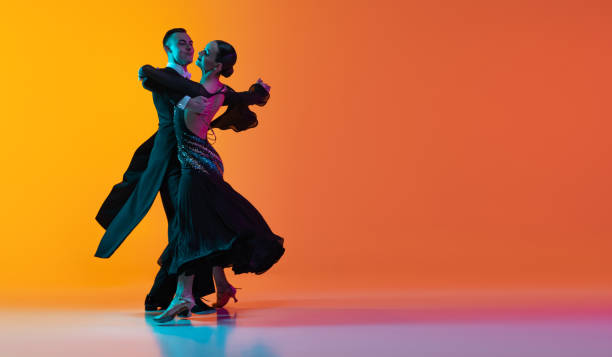
By far the most relevant cross-training on this list, (some) partnered dance is almost exactly what you do with a horse, but with a person. “Social” dancing, or dancing extemporaneously, and especially with different partners, is imminently more useful than competitive dancing, which requires more sequence memorization than lead and follow. Dancers, like horses, know how to do some things and not others, and respond differently when following, or lead differently, for the same moves.
Should you take rhythm or smooth dances? They both have something to offer.
In the smooth dances, the lead and follow while dancing “in contact” (pelvis to pelvis), is more relevant to tracking the saddle or back of the horse while riding. The waltz, in particular, has a circular motion and three-count timing very similar to the canter. Like riding, it involves two skeletons, controlled by two brains (one of them yours), moving together. Not all skeletons match well, human/human and human/horse alike—smooth dancing will sensitize you to this without you having to fall and hit the ground if you reach the failure point.
In the rhythm and club dances, the lead and follow at the hand will help your sensitivity and application at the reins, but you are really here for the Cuban motion, which will teach you to apply pelvic articulation moving with your partner. The more Cuban motion, the better—do cha cha, rumba, mambo, or whatever dance you please, but there should be Cuban motion, and especially lead and follow with Cuban motion.
Although the ankles extend (the feet point) a lot but flex only a little, suggesting antagonism to your heel depth, the emphasis on footwork and foot and ankle awareness will be good for controlling your heel depth, which is almost always a matter of the heels creeping up unconsciously, not a matter of flexibility.
Any partnered dance is good for developing the appropriate coordination, but the abovementioned dances are particularly close to the experience of riding. You will start to think of your horse as your dance partner, and your horse will thank you for it. A human dance partner will not put up with abuse or let you put words in his or her mouth.
Learn both roles, lead and follow—you do both while astride. Disregard the flashy stuff, stick with what can be led and followed—a simple left and right box done well, vigorously, with no music, will do you wonders for your rider fitness.
You’re learning for different reasons than most people, so ask your instructor specifically to develop your lead and follow and Cuban motion.
Honorable Mention: Grappling/Wrestling
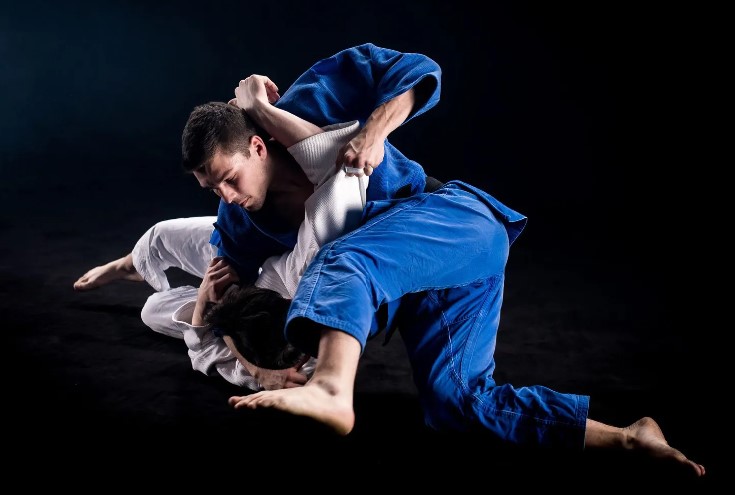
Like ballroom dance, grappling is the interaction of two skeletons together, albeit in competition with each other. Where this excels over dancing is that the horse will sometimes do things unexpected and undesired, and the aim of grappling is to prevail in just such situations.
When I was a ballroom dance instructor, I had a very young couple come in for their wedding dance. Usually the woman is a much better dancer in these cases, but the young man was extremely good and grasped how to lead very easily. Upon probing, I discovered him to have been a competitive collegiate wrestler. The skills were transferable. Two skeletons moving together, one brain in control of each.
A certain discipline of grappling is extremely popular right now and easy to access, while also having a huge corpus of conditioning exercises to produce competent grapplers. You may be as serious or as casual as you like with your training, as the culture of the school permits.
Corrective Exercise
A riding partner of mine has put in many, many hours of riding over her whole life, and has done almost nothing else for physical fitness training. She sees an expensive physical therapist every week and needs pain management every day in between. Her kid has been riding since before she could speak, also does not have other physical pursuits, is still only a child, and also sees the physical therapist. Riding hard and without complementary exercises will throw your body out of balance and hurt you.
These are exercises that, although not specifically good for your riding, are good to treat your body to if you ride hard and frequently (or need a break!).
Swimming
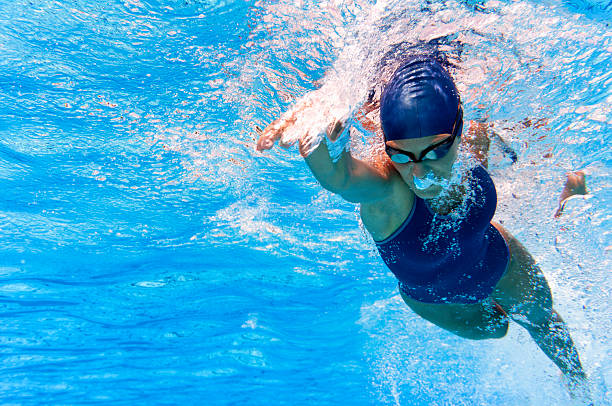
A no-impact, full-body exercise that you can control the intensity of, swimming is also a massive departure from the barn environment. Swimming is a good way to rebalance your body, and a good way to schedule in some exercise if you are seriously burned out from riding, without deprecating your riding ability.
Swimming in wild water (an ocean or a lake) is better for the soul, but your body will still benefit from a swimming pool.
Barre
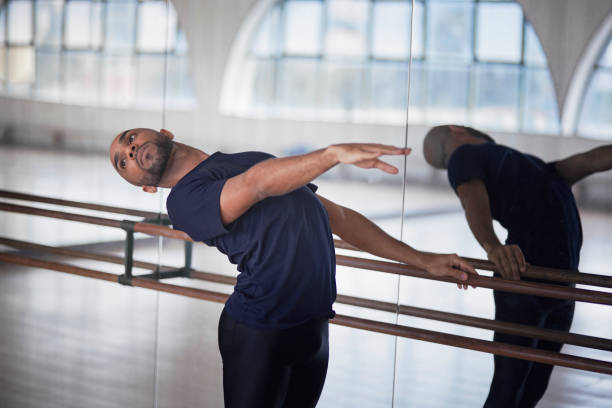
The warmup exercise for ballet strengthens muscles around the pelvis and realigns the lower back in places that can start to fall apart for some high-frequency riders. If you are a good rider and know it, but wake up with back pain, give this a try. Tendus, done well, have sorted out a few advanced riders. Working the legs with turnout will help rebalance the muscles that are often turning the legs inward, sometimes strenuously, when you ride.
Many studios offer barre exercise to non-dancers as a standalone exercise; some are dedicated to barre exclusively.
Exercise to Avoid: Antagonistic Fitness
Refer back to my first suggestion: it is better that you be fit in any way, than not fit, for the sake for your riding. If the only thing you can possibly do for fitness is what follows, or if you love doing it more than you love riding, then continue. Just know that will hold you back from your optimal riding condition.
Running
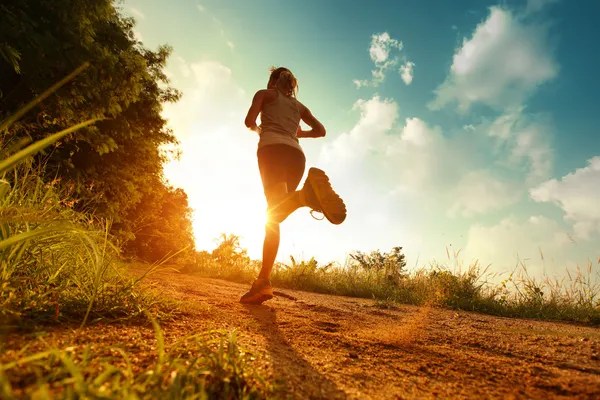
The worst culprit goes first. Running is easy, cheap, and requires no imagination, so it is ubiquitous. Being a good runner necessitates that you have passive tone in your ankles and calves, which is bad for your heel depth. You can run and ride horses, but you cannot do both well, as they necessitate opposite functions of the lower legs (if you use stirrups).
A lot of endurance riders wind up legging it on their own two feet for parts of their races, but unless you are preparing for one of these—or unless you don’t ride in stirrups—riding is not a good cross-training option.
Weight Lifting

Lifting comes in different flavors, but all require your body’s stability, not mobility. The higher the weight the more this is true. You need mobility to ride well. The act of riding is a sort of active floppiness, a yielding of the body, the likes of which is incapable of distancing iron (or stone, or tires, what have you) from the ground.
Anything “Explosive”
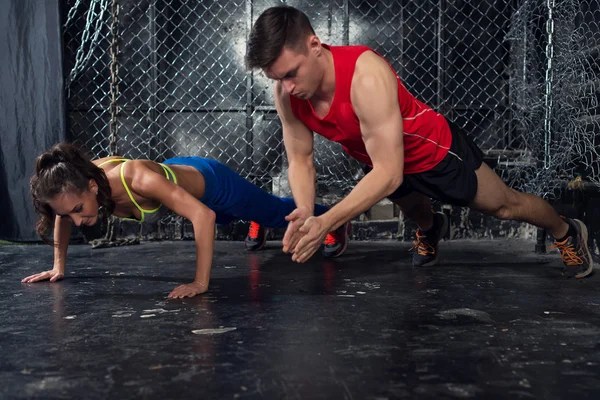
There is a trend of training “explosive” movement in team sports. The prescribed exercises for it, like squatting glutes-to-heels, are damaging multitudes of teenager’s bodies, probably permanently, and no one is being held accountable. But even if there are safe ways to train to accelerate the body suddenly, it is a movement quality irrelevant to sitting a horse, requiring a type of tension that is incompatible with the flowing movement you need on a horse—even, or especially, when the horse moves explosively.
In my past life as a kickboxer, I was what they called a “hitter,” meaning that my hits landed with a lot of power. Professional kickboxers had to wear mouthguards while holding the strike shield for me. A lot of coaches teach “explosive” power to try to achieve those results, but I assure you—and know wherefrom I speak—that the transmission of scary hard punches and kicks are from flowing like a whip, not from exploding like a bomb. Play the videos of any famous hitters in slow motion and you will see that flow generates their power. Economy of motion gives the illusion of explosion.
Ditch the “explosive” exercises. If you like team sports, most of whom espouse this obsession with explosiveness, take up polo.
Final Thoughts
B.S. Check Yourself
A riding instructor I know contradicted a popularly-held mistruth about riding and was, predictably, pilloried. One of her hecklers writes, “Physics works differently on horses.” I cannot believe, and do not believe, that she was stupid enough to think that physics works differently on a horse. Claiming belief in that issue was a tribal signifier, and that gave her (and many like her) leave to say, in her echo chamber of corroborators, something completely wrong. That’s called a “dogma,” by the way.
In Martial arts circles, falsehoods and charlatanism are moderated, and collectively labeled “Bullshido.” There needs to be this kind of policing in equestrian sport.
When I was doing parkour once, the club leader did a thing with a certain movement quality that no one else emulated. I asked him about it, and he said, “Ah, well in breakdancing, they would say…but in gymnastics, they would say…” He didn’t even say, “in parkour, they would say…” You want to be able to have this kind of global perspective of your riding, or any movement practice.
Cross-training helps you cross-verify. Get outside of your closed environment, with its tribal signifiers and re-regurgitated maxims. Train in multiple things that explain and apply the same phenomena in different ways, until you can triangulate the truth, then explain and apply them in your own way. Physics is always physics, gravity is always gravity, inertia is always inertia, the human (and equine) skeleton only moves in so many ways.
Do Something You Enjoy
Odds are that you ride because you love it. For a lot of people, that is destroyed by an abusive instructor (particularly for children). But if you are sticking with it long enough and seriously enough to ask the question of cross-training, you must love being on a horse. Don’t ruin that by cross-training in something you hate. Do something you like—or love—and let it improve your relationship with riding, with no strings attached.
 Martial Equestrian